
Acne
Acne vulgaris, also known simply as acne, is one of the most common skin disorders affecting the so-called pilosebaceous units, which are formed by hair follicles (holes where hair grows out of the skin) and sebaceous glands (glands that secrete oil to keep hair and skin lubricated). It is characterized by the chronic development of papules, pustules and nodules. It may occur with inflammatory and non-inflammatory lesions, mainly on the face, but also on the upper arms, trunk and back.
Manifestation of this disorder varies, ranging from non-inflamed open and closed comedones ("blackheads" and "whiteheads") to more severe forms, such as papules, pustules and inflammatory nodules.


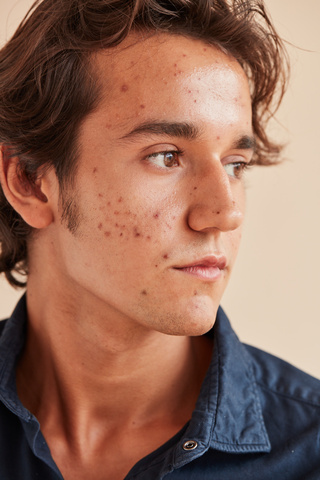


Sara, living with acne
Acne is more common among adolescents and young adults, especially males, but it is not limited to these ages. It is estimated that about 35%-90% of adolescents develop acne. It usually appears between the ages of 7 and 12 and disappears by the age of 30. However, in some cases, it may last longer or reappear in adulthood, which is more common in women.
Although acne is not a disease that causes physical disability, its psychological impact may be significant, causing people affected by it to develop low self-esteem, depression and anxiety.
References
- Sutaria Amita H, Masood Sadia SJ. Acne vulgaris. StatPearls - NCBI Bookshelf. CRC Press; 2019. Available at: https://europepmc.org/article/med/29083670
- Thiboutot D, Zaenglein A. Pathogenesis, clinical manifestations, and diagnosis of acne vulgaris. UpToDate. 2015;1–51. Available at: https://www.uptodate.com/contents/pathogenesis-clinical-manifestations-and-diagnosisof-acne-vulgaris
- Yazici K, Baz K, Yazici AE, Köktürk A, Tot S, Demirseren D, et al. Disease-specific quality of life is associated with anxiety and depression in patients with acne. J Eur Acad Dermatology Venereol. 2004 Jul;18(4):435–9. Available at: https://www.ncbi.nlm.nih.gov/pubmed/15196157
- Dalgard F, Gieler U, Holm JØ, Bjertness E, Hauser S. Self-esteem and body satisfaction among late adolescents with acne: Results from a population survey. J Am Acad Dermatol. 2008 Nov;59(5):746–51. Available at: https://www.ncbi.nlm.nih.gov/pubmed/19119094
- Collier CN, Harper JC, Cafardi JA, Cantrell WC, Wang W, Foster KW, et al. The prevalence of acne in adults 20 years and older. J Am Acad Dermatol. 2008 Jan;58(1):56–9. Available at: https://www.ncbi.nlm.nih.gov/pubmed/17945383